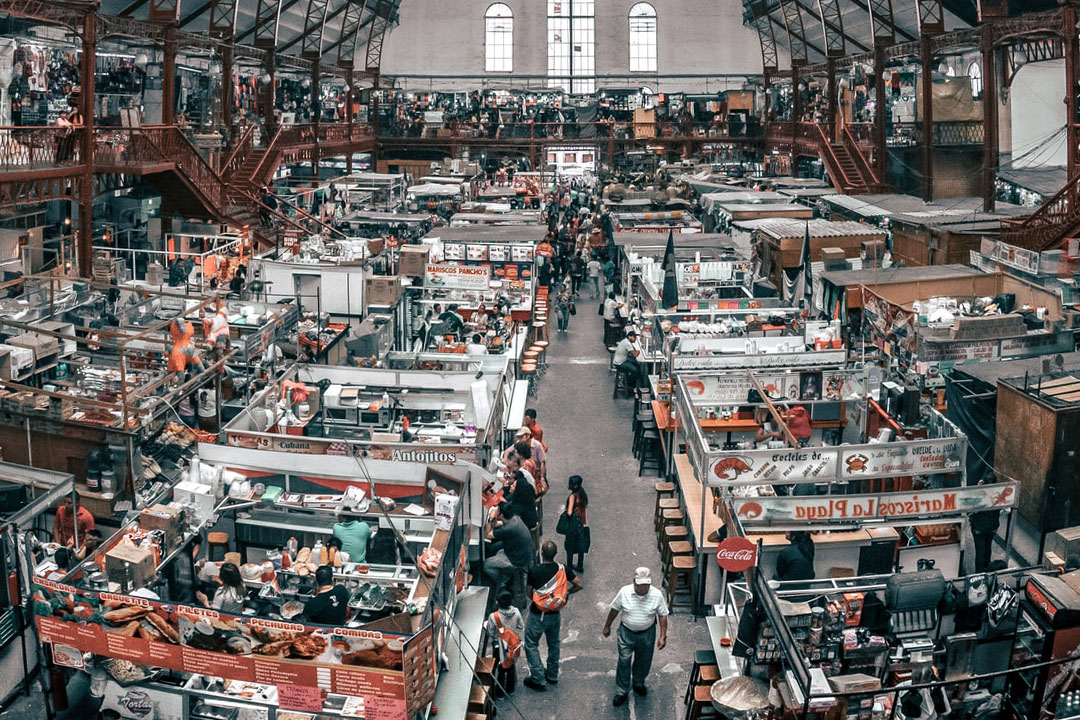
Reducing carbon emissions to eventually achieve carbon neutrality has no silver bullet and will take a number of strategies working together. A big part of this is learning how to efficiently use our existing, limited resources in a way that consumes the least amount of resources and energy possible.
Network effects driven business models have a key role to play here. Successful marketplaces tend to follow winner-takes-most dynamics. In such a scenario, a marketplace gathers most, if not all, of the potential buyers and sellers of a given product or service in one place.
This should lead to a) full transparency on and hence b) maximum comparability of all dimensions of the goods or services being traded on the marketplace. Of course, next to endogenous factors - such as price or quality - this also includes exogenous factors - such as carbon emissions or broad environmental impact. And let’s be clear, the data shows that this is something more and more consumers and businesses are paying attention to when deciding how to spend their money and how to create value.
In theory, gathering all market participants in one single place should also lead to the best possible allocation of resources for all parties involved. It also creates a more open and inclusive market environment where everyone can participate and compete, eventually resulting in better products and services that are also more environmentally friendly.
Reducing waste in the margins
In many cases, marketplaces are able to increase the utility and usage of physical assets that would otherwise go underutilized. By doing so, fewer assets are required to meet the needs of all participants in the marketplace. Good examples for this concept are platforms and marketplaces in the sharing or circular economy. Often this is achieved by renting out assets instead of selling them.
Companies like this often do not have climate impact at the center of their business models. But, as mentioned in the beginning, we must find opportunities to become less wasteful across all parts of the economy.
Doing so, though, also has the knock-on effect of making a product more appealing to consumers since, as stated in Simon Kucher’s Global Sustainability Study 2021, sustainability continues to become the expectation rather than the exception!

As examples of this principle in action, here are a number of B2B and B2C companies from our Marketplaces & Consumer portfolio that contribute to the fight against climate change, as well as the approach they take.
B2C and C2C
- Refurbed: An asset-light B2C marketplace that connects sellers of refurbished electronics such as smartphones, tablets or laptops with consumers looking for a sustainable alternative to buying brand new electronics. It also allows consumers to get an instant quote for their used electronic devices and trade them in
- RAUS: Platform allowing landowners to utilize unused or underused property by placing self-sufficient, sustainable, off-grid cabins on them and renting them out to consumers that want to reconnect with nature and recharge in the outdoors. Cabins are placed near large cities and hence require less travel
- Sunhero: B2C platform that offers a one-stop-shop to finance, order and install custom-built solar panels solutions for your roof by connecting solar panel fitters with homeowners. Panels can be bought, rented or leased. Sunhero makes it very easy and affordable for consumers to switch to sustainable, carbon-free energy, thereby reducing their dependency on large energy providers and helping to build a decentralized energy grid in the process
B2B and B2B2C:
- Lizee: Allows any consumer brand to rent out their products (e.g. outdoor gear) instead of selling them and thereby strongly increasing the utilization of such products
- Schüttflix: B2B platform for construction materials that significantly reduces the amount of deadheads (empty trips), resulting in fewer trucks delivering more goods
- Planetly (now part of OneTrust): B2B platform that supports companies of all sizes to meet their ESG requirements by offering carbon measurement, accounting and offsetting
Still lots of untapped potential for efficiency gains
As already outlined above, the marketplace business model is perfectly suited to increase the utilization (i.e. facilitate the optimal usage) of scarce resources. There are already many marketplaces that are helping to transition to a carbon neutral future.
However, while sectors like micromobility saw a nearly 500% jump in investment from 2020 to 2021, there are still a number of sectors that could benefit from a marketplace approach to significantly improve the utilization of resources, and thereby significantly reduce carbon emissions.
In particular, we see a lot of opportunity in building B2B marketplaces in untapped industries. As you can tell from the above list, we see a lot of potential to save carbon emissions in logistics and are actively looking for more Climate Tech investments in that space.