This year’s data confirms it: TechBio is no longer an experiment. It’s becoming infrastructure for the next era of medicine.
Just a few years ago, TechBio was a promise: ambitious platforms, sophisticated models, and a compelling narrative around AI transforming drug discovery. This year’s TechBio x AI Drug Discovery report shows clear signs that the sector is moving from concept to execution, not only in discovery, but also in other complex parts of drug development.
Several key signals stand out. In 2025, 31 AI-discovered assets are in clinical phases, 30+ pharma contracts have been signed with TechBio companies, and more than 150 new TechBio companies were launched in this year alone. In parallel, around 30% of all drugs discovered through R&D now involve AI at some stage, reflecting how deeply embedded computational methods have become.
In partnership with Dealroom.co, our TechBio x AI Drug Discovery report shows that European TechBio companies are on track to raise over $2 billion in 2025, already making it the third-strongest year on record, despite fewer rounds and a more selective late-stage environment.
Below, we break down the three key drivers of this shift, with a deeper dive into the data in the full report, available here.
Fewer Rounds, Bigger Bets: A Maturing Early-Stage Market
One of the clearest signals of maturity is how capital is being deployed.
In 2025, early-stage VC funding in European TechBio matched last year’s total, but across fewer rounds. This shift is being driven by a rise in breakout funding, with investors concentrating larger checks into fewer, more convincing companies.
This is reinforced by category-level data:
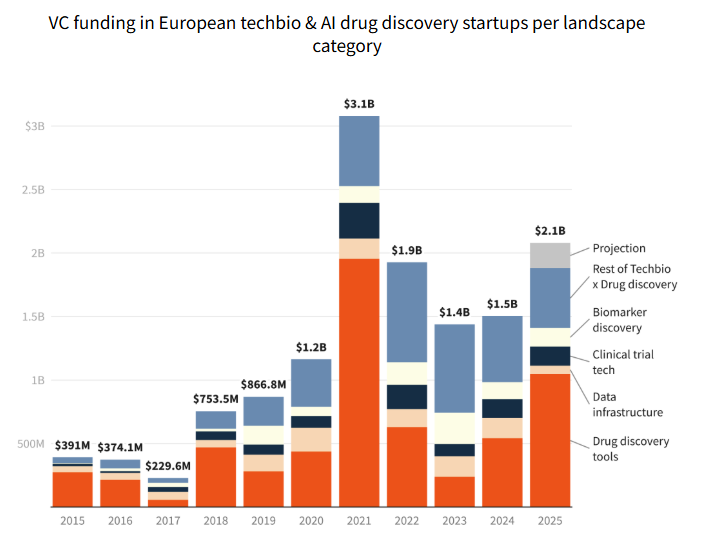
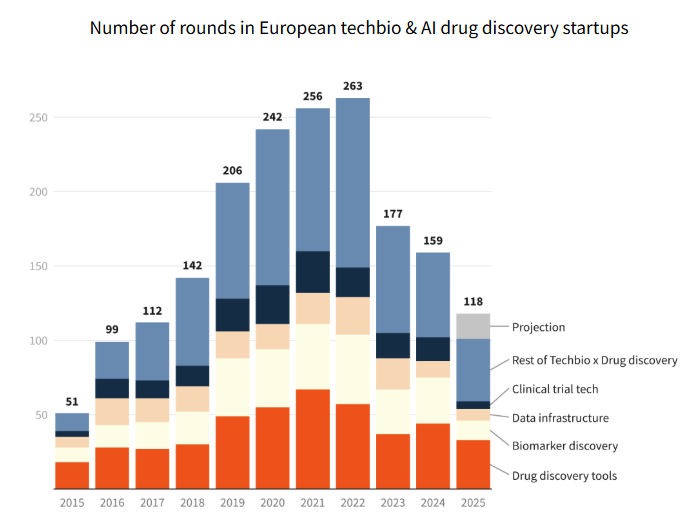
This pattern suggests a new phase for TechBio: less hype, more substance, and a market beginning to behave like true industrial infrastructure.
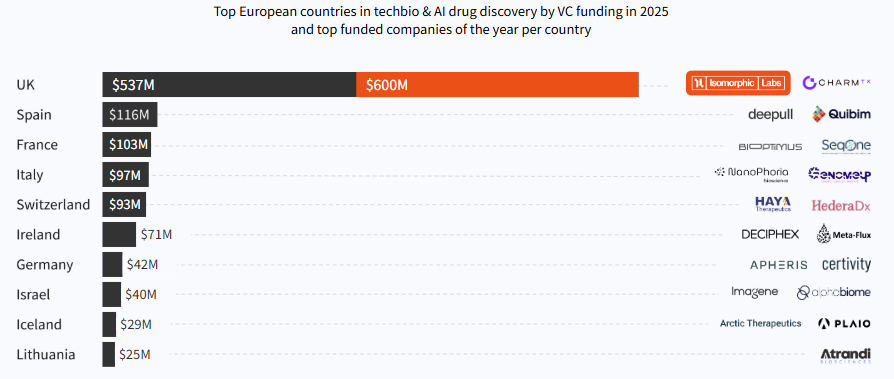
Geographically, the UK leads Europe in TechBio funding. This is driven heavily by Isomorphic Labs’ $600 million round. Spain climbed the rankings with Quibim’s €50 million Series A and Deepull €50 million Series C in 2025. France follows closely, and notable rounds include a €41 million investment in Bioptimus and €20 million in SeqOne in 2025.
This distribution underscores how TechBio clusters are forming around deep computational talent and translational research hubs. Larger conviction-driven rounds also reflect the sector entering a scale-up phase rather than exploring experimental concepts.
In 2025, TechBio exits in Europe have been driven almost entirely by private M&A. IPO markets have become highly selective with quality thresholds that only 15% of European firms are estimated to meet, with 8 deals across 2025.
Strategic acquirers such as Takeda, Novartis, AstraZeneca, Abbott, and GE Healthcare are driving M&A activity to strengthen pipelines and access innovation, putting 2025 on track to be the second-strongest year for TechBio exits.
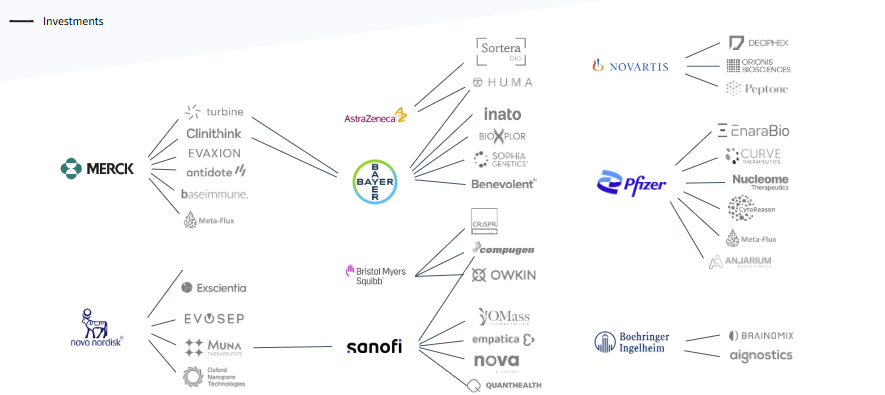
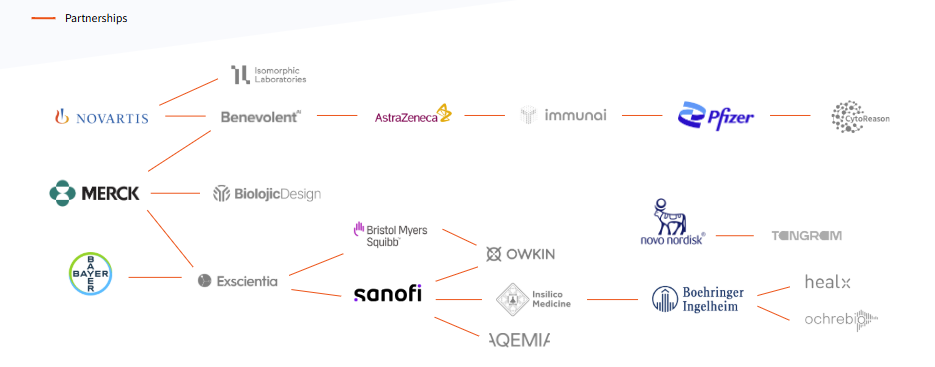
Big Pharma is no longer watching from the sidelines. The data shows a notable increase in both investments and partnerships between pharma and TechBio companies, signalling recognition that AI-first approaches are now mission-critical, not optional.
Deep Dive: Clinical Trial Tech is reducing cost, time, and risk
Clinical trials remain the highest cost and risk centre in drug development. Phase I–III represents 62% of the total development cost, yet clinical trial tools have historically attracted far less venture funding. That imbalance is starting to change
In 2025, clinical trial tech is on track for the second-best funding year on record, with around $200 million raised, more than 10x higher than a decade ago. TechBio companies are now directly attacking inefficiencies:
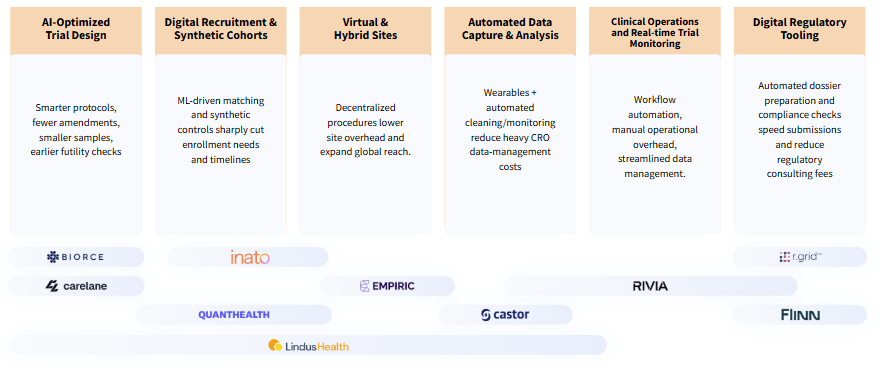
Real-time monitoring and AI-powered clinical operations platforms, such as Speedinvest portfolio company Rivia, can deliver up to $10 million in time-value per trial by eliminating manual work, accelerating data review, and streamlining decision-making. Complementing this, Orakl Oncology can enable highly targeted trial design and more precise patient stratification through its super high-quality avatar biobank.
The result is faster insights, leaner teams, improved capital efficiency, and ultimately, a higher probability of success.
Deep Dive: Chemical Synthesis is reinventing the world of molecules
While AI transformed the digital side of discovery, chemical synthesis remains one of the most inefficient parts of the process. To get from trillions of possible molecules to a single approved drug requires the synthesis of tens of thousands of compounds over many years.
Today’s reality is stark: 50% of reactions fail or give low yields, 40% of chemists are approaching retirement, and supply chain and CRO dependencies create systemic risk. This is where a new class of TechBio companies is emerging. By combining AI, robotics, and automation, platforms such as OnePot.AI are turning synthesis into an intelligent, self-improving system. Instead of hand-crafted, trial-and-error chemistry, this improved synthesis enables faster cycles, higher hit rates, and more predictable timelines.
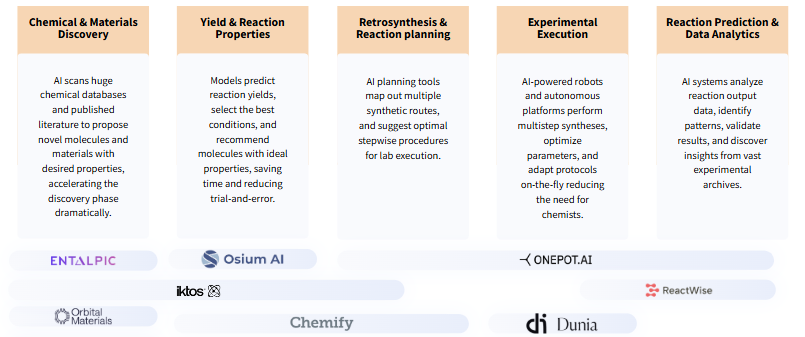
This segment has already surpassed $200 million in funding in 2025, without even seeing a major late-stage round yet. The implication is profound: a future where chemical synthesis becomes scalable, digital, and programmable.
A new kind of story
This year’s report tells a different narrative to previous years. Not one of hype cycles or speculative breakthroughs, but of tools, processes, and platforms becoming deeply embedded in reality.
The sectors of clinical trial tech and chemical synthesis are no longer peripheral; they are becoming central to how new medicines will be developed over the next decade. From concept to reality, TechBio is no longer asking if it will transform drug development. It already is.